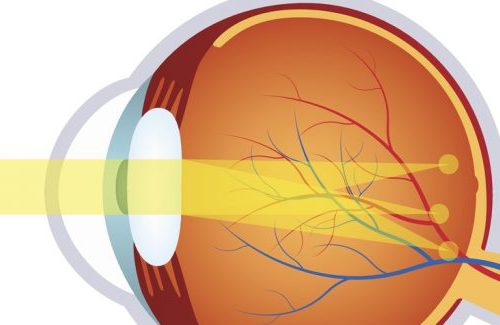
More commonly known as farsightedness, hyperopia occurs when light rays entering the unaccommodating eye fall behind the retina as opposed to on the retina. Depending on the degree of hyperopia, patients will have blurred distance or near vision and may complain of headaches and tired eyes.

Project Category: Eye Conditions
Astigmatism
Astigmatism occurs when the cornea or lens is irregularly shaped – as a consequence, light rays entering the eye do not form a focused image on the retina. Depending on the degree of astigmatism patients may complain of blurry vision, fatigue and headaches, but astigmatism can be treated with glasses, contact lenses or refractive surgery.
Amblyopia
An early visual development problem occurring before the age of nine, amblyopia – more commonly known as “lazy eye” – is the most common cause of visual impairment among children, affecting about two to three out of every 100 children. It’s also the most common trigger of monocular (one eye) visual impairment among young and...
Ptosis
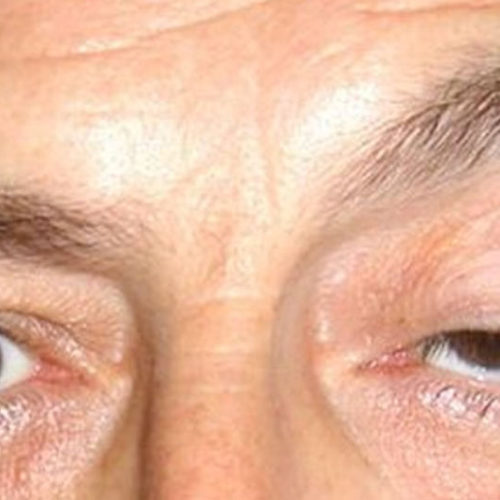
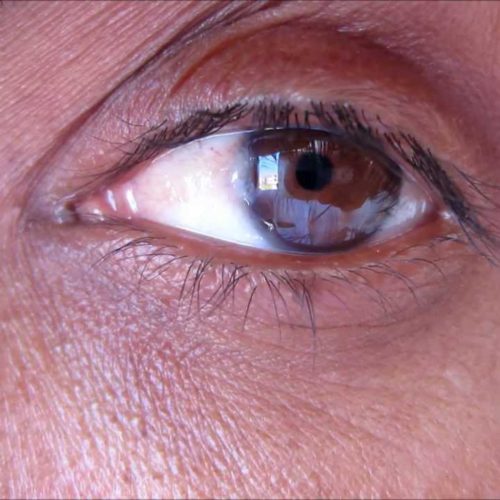
“Ptosis” is the medical term for a drooping upper eyelid. Eyelid drooping can sometimes affect vision if it’s severe. Ptosis isn’t a disease, but a symptom of a condition that you should seek treatment for. It may occur for several reasons such as: disease, injury, birth defect, previous eye surgery and age. A number of...
Entropian / Ectropian
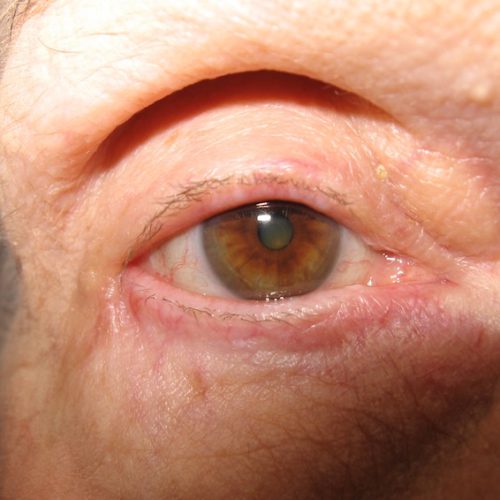
Entropion refers to a condition in which the eyelid turns inwards, which means the eyelashes turn upwards and rub against the eye, causing redness, irritation, and abrasions on the cornea. Without treatment, this continuous abrasion can cause eye infections and scarring of the eyeball. Ectropion, on the other hand, involves the lower eyelid rolling outwards...
Blepharitis
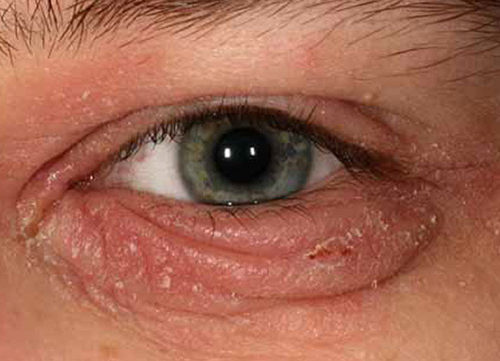
This inflammation of the eyelids is the most common cause of dry eyes. It can result from An excess growth of bacteria that’s normally found on your skin A blocked oil gland on your eyelid A hormone imbalance Allergies It makes your eyelids red, itchy, and a little swollen. The bases of your eyelashes may...
Pterygium
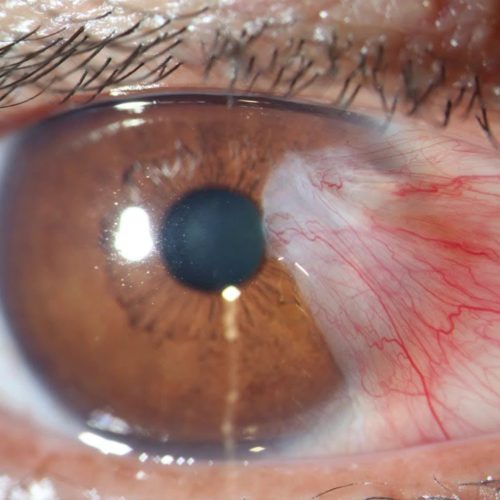
Pterygium is a raised, wedge-shaped growth of the conjunctiva. Most common among those who live in sunny countries – particularly people who enjoy outdoor pursuits – the main symptom is a growth of pink, fleshy tissue on the conjunctiva, the clear tissue that lines the eyelids and covers the eyeball. It usually forms on the...
Pinguecula
Pingueculae are non-cancerous bumps on the eyeball which typically occur on top of the middle part of the sclera (the white part of the eye). Most commonly found among people who spend a great deal of time outdoors, a pinguecula (pin-GWEK-yoo-lah) is a yellowish, slightly raised thickening of the conjunctiva on the sclera. Pingueculae primarily...
Keratoconus
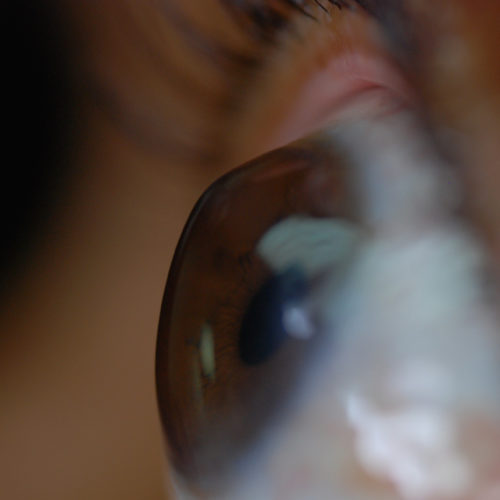
Keratoconus is a thinning disorder of the cornea that results in distortion and reduced vision. We see through the cornea, which is the clear outer lens or “windshield” of the eye. Normally, the cornea has a dome shape, like a ball. Sometimes, however, the structure of the cornea is just not strong enough to hold...
Corneal Ulcer
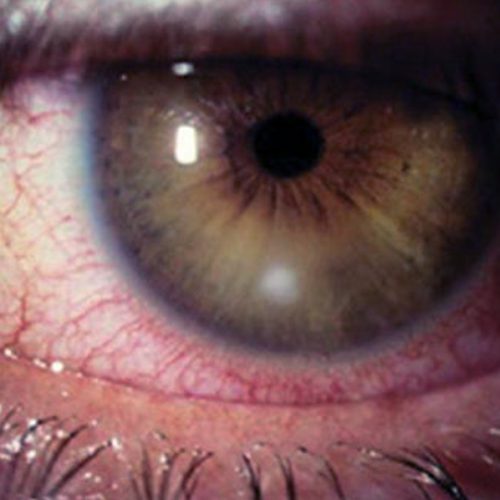
A corneal ulcer is an open sore or epithelial defect with underlying inflammation on the cornea, the clear structure in the front of the eye. The cornea overlies the iris, which is the coloured part of the eye. It will often appear as a grey to white opaque or translucent area on the normally transparent...